


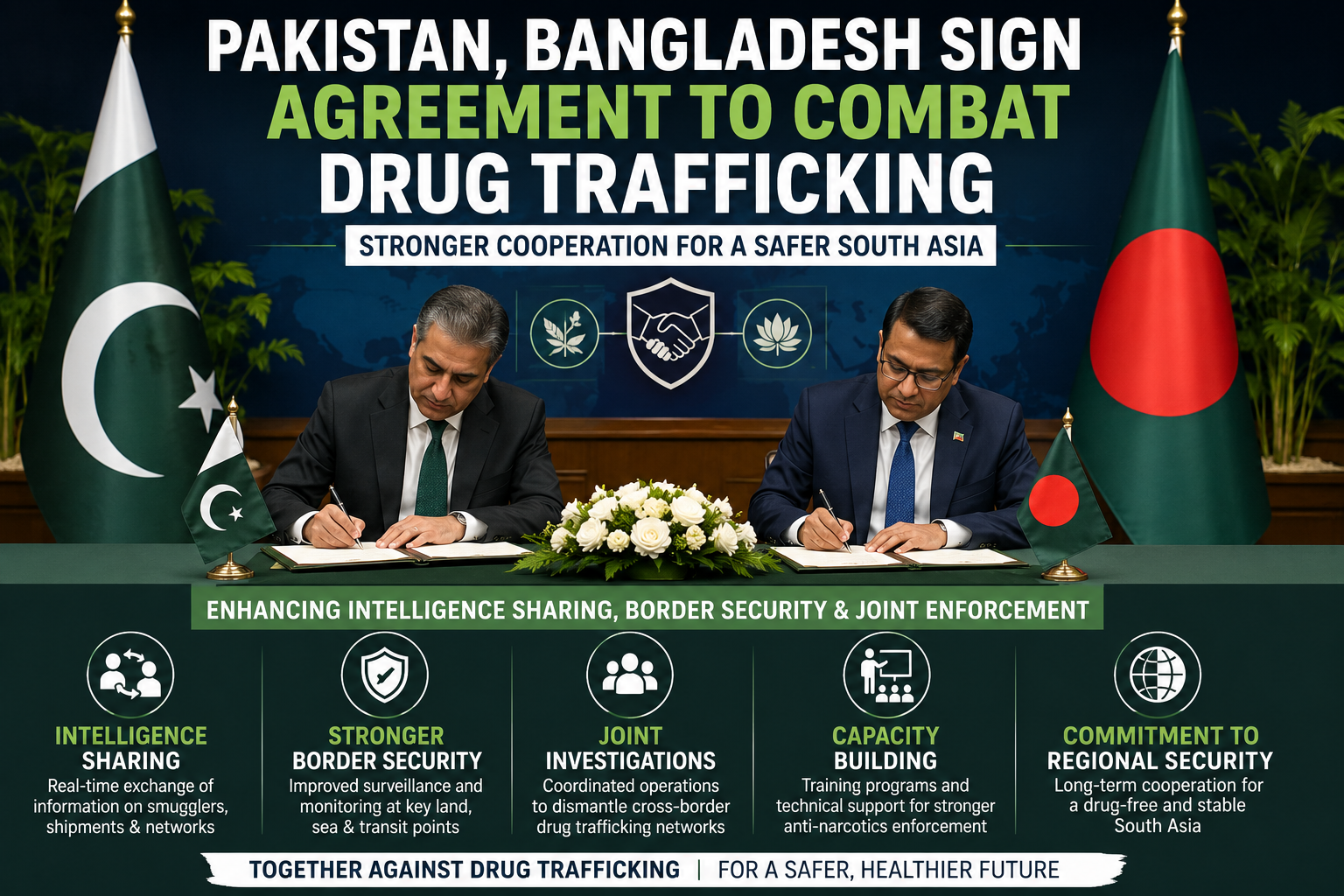
Pakistan and Bangladesh have formally signed a new agreement aimed at strengthening cooperation to control and reduce drug trafficking across borders. The deal marks an important step in improving regional security and addressing the growing concern of illegal drug trade in South Asia.
Both countries have been facing increasing pressure from drug smuggling networks that use land, sea, and transit routes to move illegal substances. The agreement focuses on intelligence sharing, border monitoring, and coordinated law enforcement actions to dismantle trafficking networks operating between the two nations.
Strengthening Border Security and Coordination
Under the newly signed arrangement, Pakistan and Bangladesh will enhance collaboration between their anti-narcotics agencies. The agreement includes faster exchange of information about suspected smugglers, improved surveillance at key transit points, and joint investigations where required.
Officials from both sides emphasized that drug trafficking not only affects public health but also contributes to rising crime rates and financial instability in the region. By working together, both governments aim to close loopholes that traffickers have previously exploited.
Focus on Intelligence Sharing and Enforcement
A key feature of the agreement is real-time intelligence sharing. Law enforcement agencies will now be able to alert each other about suspicious movements, shipments, and networks linked to narcotics trade.
Training programs and technical support are also expected to be part of the cooperation, helping strengthen the capacity of anti-drug units in both countries. This step is seen as crucial in ensuring that enforcement becomes more effective and coordinated.
Regional Impact of the Agreement
The Pakistan Bangladesh drug trafficking agreement is expected to have a wider impact beyond bilateral relations. South Asia has long been a transit route for various illegal drug networks, and closer cooperation between countries in the region is considered essential for long-term control.
Experts believe that such agreements can reduce supply routes and make it harder for organized criminal groups to operate freely. It also sends a strong message that regional governments are committed to tackling cross-border crime collectively.
Commitment to Long-Term Cooperation
Both Pakistan and Bangladesh have expressed commitment to maintaining ongoing dialogue on security and narcotics control. The agreement is not a one-time measure but part of a broader strategy to improve law enforcement coordination and regional stability.
Authorities from both countries have indicated that regular meetings will be held to review progress, identify new challenges, and update strategies where necessary.
Conclusion
The signing of this agreement reflects a serious and coordinated effort by Pakistan and Bangladesh to address the rising threat of drug trafficking. With improved intelligence sharing, stronger border control, and joint enforcement actions, both nations aim to reduce the influence of illegal drug networks and enhance regional security.
About The Author