


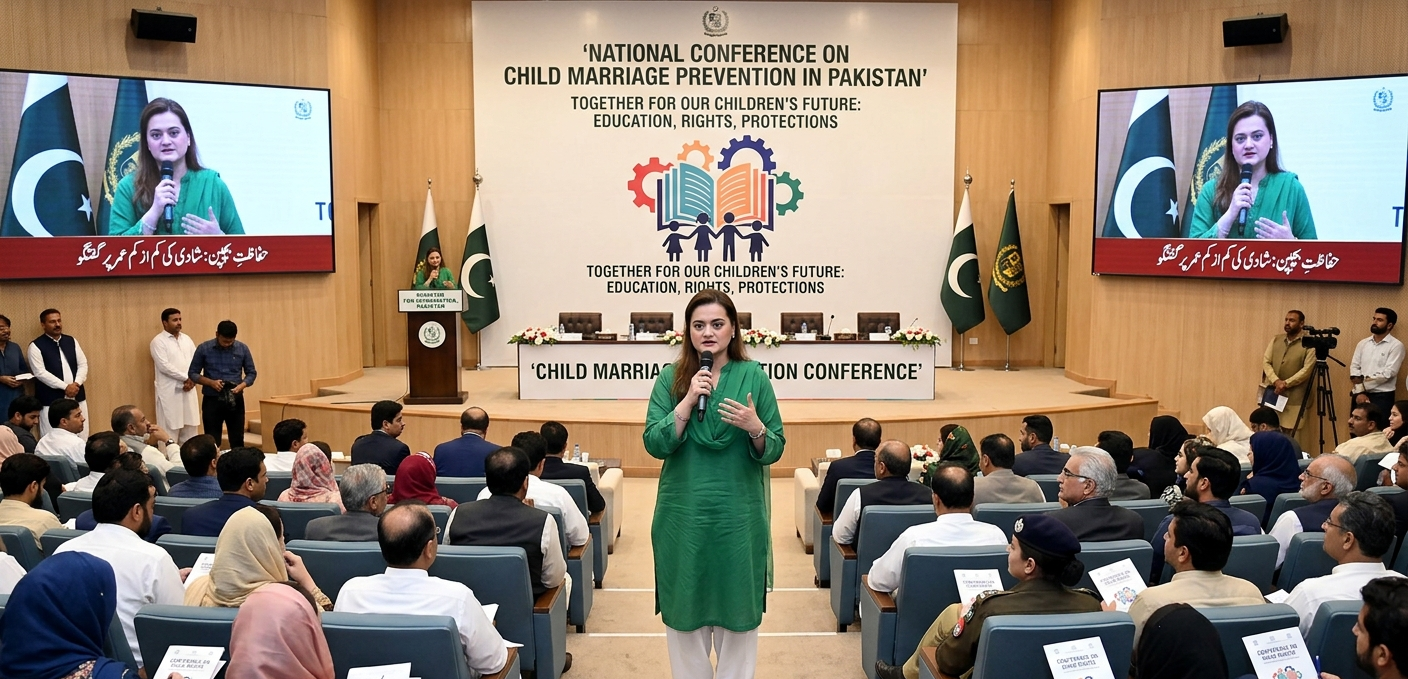
In Pakistan, efforts to address early and forced marriages continue to gain attention at national and policy levels. One of the recent developments in this regard was the participation of Maryam Aurangzeb in a Child Marriage Prevention Conference, where key stakeholders gathered to discuss legal, social, and educational strategies to protect children’s rights.
The conference brought together government representatives, legal experts, social activists, and child welfare organizations to evaluate the current challenges surrounding child marriage in the country. The discussion focused on strengthening laws, improving enforcement mechanisms, and increasing awareness at the community level.
Maryam Aurangzeb emphasized the importance of coordinated efforts between federal and provincial institutions to effectively reduce child marriage cases. She highlighted that education and awareness are essential tools in changing societal behavior, especially in rural and underprivileged areas where early marriage remains more prevalent.
Speakers at the event pointed out that although laws exist to restrict child marriage, gaps in implementation continue to allow violations in several regions. Participants stressed the need for stronger monitoring systems and better reporting channels to ensure timely action in such cases.
Another major topic discussed was the role of education for girls. Experts agreed that increasing school enrollment and reducing dropout rates can significantly contribute to delaying early marriages. Economic support programs for low-income families were also suggested as a practical solution to reduce financial pressures that sometimes lead to child marriages.
The conference also addressed the importance of media campaigns and community engagement programs. Awareness campaigns were recommended to challenge long-standing cultural norms and promote the idea of protecting children’s rights.
In conclusion, the Child Marriage Prevention Conference marked an important step toward strengthening Pakistan’s commitment to protecting children. The participation of policymakers like Maryam Aurangzeb reflects growing political attention on the issue, while continued collaboration between government bodies and civil society remains essential for long-term progress.
About The Author