

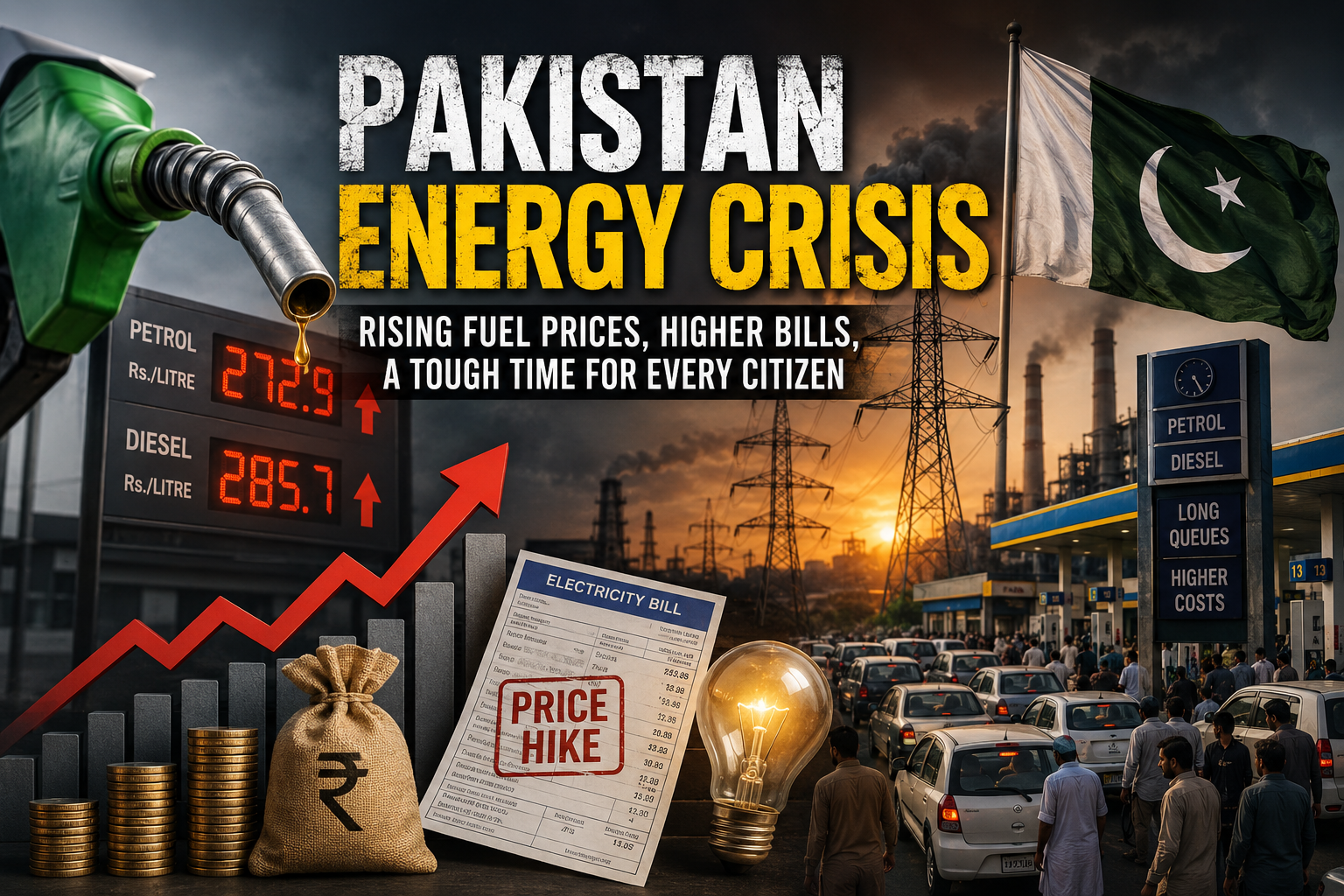
Pakistan is once again dealing with a serious energy crisis as fuel prices continue to rise across the country. Petrol and diesel costs have increased sharply in recent months, putting pressure on households, businesses, and industries. Transport fares are rising, electricity production costs are increasing, and inflation is becoming harder to control.
The current Pakistan energy crisis is affecting almost every sector of daily life. From long queues at petrol stations to higher electricity bills, the situation is becoming difficult for millions of citizens.
According to recent reports, Pakistan raised petrol and diesel prices several times due to international oil market instability and increasing import costs. The country heavily depends on imported fuel, making it vulnerable to global supply disruptions and currency pressure.
Why Pakistan Is Facing Another Energy Crisis
There are several major reasons behind the current Pakistan energy crisis. The biggest factor is the increase in global oil prices caused by tensions in the Middle East. Since Pakistan imports a large percentage of its fuel, any disruption in global supply directly impacts local prices.
Reports show that conflicts around the Strait of Hormuz have increased shipping and insurance costs for oil imports. Pakistan’s fuel supply chain has become more expensive, forcing the government to increase petrol and diesel prices repeatedly.
Another major issue is the depreciation of the Pakistani rupee against the US dollar. Since oil imports are paid in dollars, a weaker rupee means Pakistan has to spend more money on fuel purchases.
At the same time, the country is struggling with circular debt in the power sector. Electricity companies are facing payment issues, while consumers continue to experience load shedding and expensive electricity bills.
Fuel Prices Continue to Increase
Fuel prices in Pakistan have reached record levels during the current crisis. Reports published in recent weeks showed major increases in petrol and diesel prices due to global market pressure and domestic levies.
The government stated that rising international oil prices and import expenses made the increase unavoidable. However, many citizens believe that high taxes and petroleum levies are also contributing heavily to the rising fuel burden.
The increase in fuel prices has directly impacted transportation costs. Public transport fares, ride-hailing services, delivery charges, and logistics costs have all increased. Businesses are transferring these extra expenses to consumers, causing further inflation across the market.
Impact on Common Citizens
The biggest impact of the Pakistan energy crisis is being felt by ordinary people. Families already dealing with inflation are now facing higher transportation expenses and rising electricity bills.
Food prices are also increasing because transportation and production costs depend heavily on fuel. Farmers, factory owners, and small business operators are struggling to manage operational expenses.
Many citizens on social media have expressed frustration over the continuous increase in petrol prices and the lack of long-term energy planning. Online discussions show growing concern about how the crisis is affecting daily life and savings.
Students and office workers who travel daily are among the most affected groups. Higher fuel costs have increased commuting expenses significantly in major cities.
Pressure on Pakistan’s Economy
The Pakistan energy crisis is also creating serious economic challenges. The country’s import bill has increased sharply because of expensive fuel purchases from international markets.
Reports indicate that Pakistan’s oil import costs surged dramatically during the ongoing global energy crisis.
Industries that depend on fuel and electricity are facing higher production costs. Textile factories, manufacturing units, and transport companies are under financial pressure. Some businesses are reducing operations due to rising expenses.
Economic experts believe that continuous fuel price increases may slow industrial growth and increase unemployment if the situation continues for a longer period.
Government Response to the Crisis
The government has announced several measures to manage the situation. Officials stated that fuel price adjustments were necessary because of global market conditions and supply disruptions.
Prime Minister Shehbaz Sharif previously said the government absorbed part of the fuel price burden to reduce pressure on citizens.
Authorities have also warned petrol stations against hoarding fuel and promised strict action against illegal stockpiling. Weekly fuel price reviews are being conducted to monitor market conditions.
However, many experts believe Pakistan still needs long-term energy reforms instead of temporary relief measures.
Solar Energy Becoming an Alternative
One positive development during the Pakistan energy crisis is the rapid increase in solar energy adoption. Due to expensive electricity and fuel prices, many households and businesses are shifting toward solar systems.
Reports show that Pakistan’s solar energy sector has grown rapidly over the last few years. Rooftop solar installations are helping reduce dependence on imported fuel and lowering electricity costs for consumers.
Experts believe investment in renewable energy can reduce Pakistan’s dependence on imported oil and improve energy stability in the future.
What Happens Next?
The future of the Pakistan energy crisis depends largely on international oil markets and domestic economic stability. If global oil prices remain high, Pakistan may continue facing fuel price pressure in the coming months.
Economic analysts suggest that Pakistan must focus on renewable energy, reduce power sector losses, and improve fuel storage capacity to avoid repeated energy emergencies.
Without strong reforms, rising fuel costs may continue affecting inflation, transportation, industrial growth, and household budgets across the country.
The current situation highlights the urgent need for a stable and long-term energy policy that can protect Pakistan’s economy and reduce dependence on imported fuel.
About The Author