

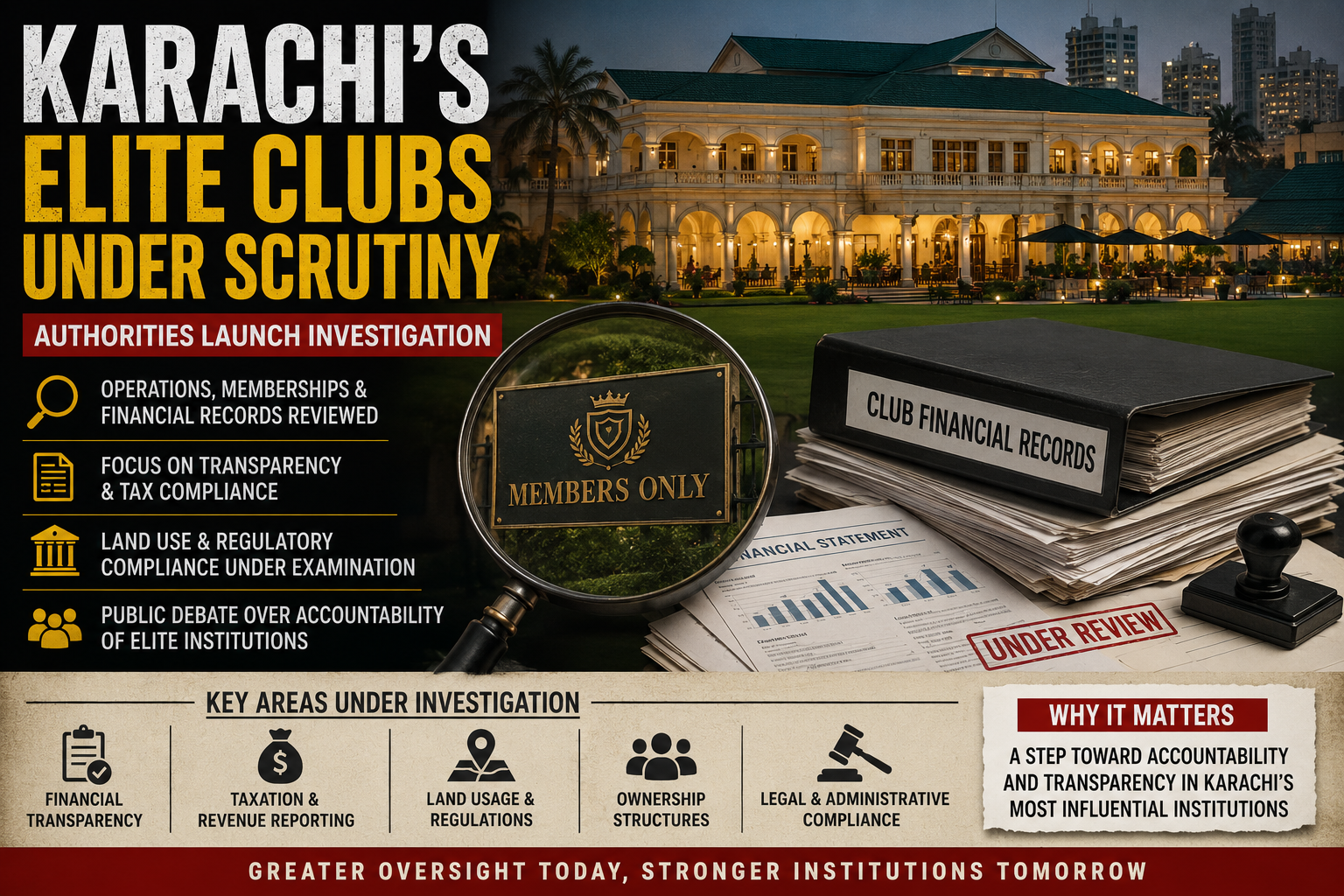
Karachi’s most exclusive social and recreational clubs have recently come under official scrutiny as authorities begin reviewing their operations, memberships, financial records, and regulatory compliance. The move has sparked widespread public debate across the city, raising questions about transparency, taxation, and the role of elite institutions in Pakistan’s largest metropolitan hub.
These elite clubs, known for their high-profile memberships and premium facilities, have long been symbols of luxury and influence. However, recent developments suggest that regulatory bodies are now examining whether these institutions are fully complying with government laws, including financial reporting standards and property usage regulations.
Rising Concerns Over Transparency
The main concern driving the Karachi elite clubs investigation is the alleged lack of financial transparency. Authorities are reportedly reviewing whether all income sources, including membership fees, event charges, and private functions, are being properly documented and taxed.
In addition, questions have been raised about the ownership structures of several clubs. Some reports suggest that certain facilities may be operating under outdated registrations or unclear administrative control, prompting regulators to seek updated documentation.
Focus on Land Use and Compliance
Another key aspect under review is land usage. Many elite clubs in Karachi occupy prime urban land, and officials are assessing whether the land is being used strictly according to its original allocation. Any deviation from approved usage could lead to legal or administrative action.
Urban development experts believe that this scrutiny could set a precedent for other private institutions operating on government-leased or subsidized land.
Public Reaction and Social Debate
The issue has triggered strong reactions on social media and among citizens. While some support the government’s move as a necessary step toward accountability, others argue that elite clubs contribute significantly to Karachi’s social and cultural life.
Critics of the investigation fear that excessive regulation could disrupt long-standing social institutions. Supporters, however, maintain that no organization—regardless of status—should be exempt from legal and financial oversight.
Potential Impact on Karachi’s Social Landscape
If the investigation leads to stricter regulations, elite clubs may be required to restructure their financial systems, improve transparency, and ensure full compliance with tax laws. This could also influence how private recreational spaces operate in other major cities across Pakistan.
Business analysts suggest that the outcome of this scrutiny could reshape the governance model of private clubs, pushing them toward more formalized and regulated frameworks.
Conclusion
The ongoing Karachi elite clubs investigation marks an important moment in the city’s regulatory history. As authorities continue their review, the situation highlights a broader shift toward accountability and transparency in institutions that have long operated with limited oversight.
Whether this leads to major reforms or limited adjustments, the developments are expected to influence Karachi’s social and administrative landscape in the coming months.
About The Author